Wednesday, September 16, 2009

the shadow on the white wall at sunrise and the sea and the honeycomb...

pathway

"it was a hot day in june when i came to s. quirico. the midday gun had sounded half an hour before; all the world was sleeping. half afraid that i should disturb a siesta, i knocked at the door of the of the canonica and presently the priest himself appeared, a sever yet kindly man who little by little beginning to smile was content to show me what treasures he had. one of thm at least i shall never forget. for after uncovering, not without much trouble and many dim mutterings, the madonna of the place, a picture perhaps by domenico puligo, where mary holds christ in her arms who has just grown weary of playing with s. giovannino, he led me behind the high altar where there was hidden one of the most beautiful of those giattoesque crucifixes which i have so loved. how weary one grows of all of the realistic pictures in the world; sometimes they press upon one in the galleries where they are prisoners like an immense crowd of outraged people who can never die, whom we have imprisoned to stare at and criticize at our leisure. it is only of those pictures, half pattern, half the impassioned gesture of a dream, of which we never grow tired or weary whatever they be, and then it is most often alone in some forgotten place like this church at rubella that we find them. and for what have we forgotten them: for the discontented tireless genius of the world. what sort of man is he who could hope to live in the presence even of so lovely a thing as mona lisa, or who could bear to stay always near the assunta of titian? these and such as these are too subtle or too strong for us, we look at them as we look at the sun and pass into shadow. but those pictures of the annunciation, or the nativity, or the coronation of the madonna, those early crucifixes too, full of an exquisite pattern of line and colour, mere multi-coloured shadows on the wall, we can bear all day long, they seem to fall in with one's mood, to be content to minister to us, and will never thrust themselves upon us or compel us to suffer some strong and profound emotion that to know for a moment is pleasure, but torture to endure is for ever. who indeed could bear to sleep beneath a picture of the crucifixion by any later painter; but under such a thing as this cross in s. quirco one might be content, not to sleep only, but to die; it is just a beautiful symbol, a shadow on the white wall at sunrise and sunset, of the thought that is in our hearts. and then if you want reality, look you, there are the hills and the gardens: and if indeed you would see the madonna, as perhaps she was, why there she sits - is it not so? - under the cypresses in the cool of the day not far from the house, singing to her little son. when will art again as in duccio's day free itself from the convention of reality, and return to the convention of beauty."

edward hutton, country walks about florence, 1908

"paradise lost is a good example of the long poem. milton is always there, holding his hand beneath you. he doesn't want you to fall. when angels appear, he suggest the proper attitude to take toward angels. in short, he tells you what to think. he has a a huge hand underneath you. in a brief poem, it is all different: the poet takes the reader to the edge of a cliff, as a mother eagle takes its nestling, and then drops him. readers with a strong imagination enjoy it, and discover they can fly. the others fall down on the rocks where they are killed instantly. the poet who succeeds in writing a short poem is like a man who has found his way through a stone wall into valley miles long, where he lives. he walks back up the valley, and opens a door in the wall for an instant to show you where the entrance is. the more imaginative readers are able to slip through in the twenty or thirty seconds it takes to read his poem. those who expect the poet to give them ideas see only a vague movement on the side of the mountain. before they have turned all the way around to the face of the poem, the door has closed. readers of ancient poetry are used to staggering along under lines swelled with the rhetoric of philosophy courses, experiences under mind expanding drugs, new criticism - in short, the world of prose. they find it hard at first to concentrate on a short poem, but eventually they learn to find some value in being dropped."

robert bly, introduction to the anthology: the sea and the honeycomb, a book of tiny poems, 1971

two long quotes about the benefits of abstraction and brevity, from two books randomly picked up at a local library sale (one was a dollar, and one 50 cents...). both quotes directed towards the deeper immersions in art and poetry, neither without problems, yet both entering territory of the utmost importance, at least to my eyes and ears... and for some reason they felt, to me, quite connected.

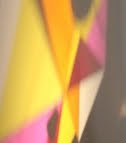
the photograph (a snapshot from the 1920's), was also found sunday for a buck, and as if the glue that binds all things, seems entirely an image of bly's "open door" and in feeling, hutton's "shadows on the wall"... bly's words regarding the difference between long poems and short ones also seems quite relevant in relation to the collecting of snapshots as opposed to high art photographs, certainly in relation to the latter being seen in an art space with a capital A, and the former, a gem usually discovered in a dusty box amongst a thousand unremarkables. its beauty, probably accidental rather than intentional, also speaks volumes in relation to hutton's ideas around abstraction, where image is never completely gone, but one can still wander amongst the patterns within an image based composition. it's a world, or perhaps a netherworld, hovering between the "convention of reality" and the "convention of beauty".

Labels: , , , , , , ,

Wednesday, June 20, 2007

when traffic becomes patterns...

traffic1

traffic2

two beautiful 1953 drawings by louis kahn, studying traffic movement patterns in philadelphia. one existing, one proposed. both from the work of louis kahn, la jolla museum of art 1965; and both could certainly be drawings by paul klee.

Labels: , , , ,

Monday, June 18, 2007

the public lives of sketches...

willumsens5

willumsens4

willumsens3

willumsens2

willumsens1

the danish artist j.f. willumsens (1863-1958) was known mainly as a painter, although he also worked with ceramics, sculpture, printmaking, photography, and even designed his own house.

willumsens had a somewhat scientific and obsessive approach to studies, feeling the necessity to know every last detail of a composed painting in his head before he started the final work.

in his own words: "After all the preliminary work for a picture has been done, like compositions, sketches, studies, etc., and I think I know to the very last detail all that is necessary to complete the picture, I paint a draft version of it, usually in full size, from memory.

It is this draft version that I call the "dress rehearsal". From it I can see whether I am capable of painting the actual picture with the knowledge I have acquired from my studies, or whether more are needed. For it is my view that a painter has not mastered his subject unless he knows it by heart. One cannot at the same moment be an enquiring pupil and a knowledgeable master. I believe that I am the only artist who uses this procedure."

that willumsens was the only artist to use this procedure is debatable; but what is not open to discussion are the beauty of his preliminary color sketches. although these were never intended to be discussed as finished artworks in their own right, they would fit comfortably into the world of early abstract painting, even if this insertion was not part of willumsens' (nor anyone else's) plan. though never intended, the visual connections to abstract painting history - from paul serusier to alfred jensen - are certainly there. of course, it's somewhat presumptuous on my part to read the sketches of someone as obsessed with finished work as willumsens as something more - but when i discovered these images, they killed me!

i've recently been thinking a lot about the idea of sketches and how much an artist might or might not be able to control their eventual entry into the world. an upcoming release of some of nick drake's home recordings is a mix of both good and bad. some of it is unbelievably powerful and all of it is undeniably private (i've heard the whole thing... most of this stuff has existed for ages on various bootlegs, and this new release is already circulating on the web). drake was extremely shy, as well as a very very careful composer and songwriter; and i can't help but think he would be painfully uncomfortable with the idea that these "dress rehearsals" or, worse, these preliminary "color sketches" are being released as a record. on the other hand, there is no denying that these recordings do more than simply shed light on process. there is some seriously raw mind numbing beauty here of course.

perhaps an artist has to be resigned to the fact that when such things are brought to light; they will most likely be co-opted by a viewer/listener to fulfill expectations and purposes never intended by the artist (similar to the trajectory of most artworks). for better or worse, drake and willumsens sketches have no choice but to allow us to make them our own... to find transcendence in things, that perhaps, were never supposed to contain quite so much power.

Labels: , , , ,

Saturday, May 19, 2007

sometimes mistakes are made...

mistakescan

so much of my work comes from mistakes, and finding potential in the results of accidents and the unintended... in this case my scanner was set to enlarge a small image of a drum head in a photo of a band, but i changed the photo and didn't look at the settings and hit the "scan" button...the resulting image above is something i'd never have made intentionally...but it reminds me a bit of one of strindberg's photos... and it seemed a good time to inject a little abstraction into the weekend...

Labels: , , ,

Wednesday, May 09, 2007

natural selection part one...

model648

model650

model659

model668

model652

model677

some images of models related to trees from the natural history museum in bergen norway. the museum still has many areas that feel like 1900, and the rooms filled with animals in display cases felt like a real sideshow spectacle - complete with a stuffed duck billed platypus! unlike the queasy punch of this great hall filled with a horde of dead animals, a small section on the ground floor related to plant life contained some quieter cabinets of curiosities.

in these slightly gloomy and haphazard displays, there were many things to grab the attention of a sensitive eye; but the objects that stood out as the oddest were a series of plaster and painted models of seeds, spores, stems, etc. related to the biology of trees.

these strange and wonderfuly surrealist and martian-like structures verged on abstraction and felt like visual companions to the paintings of artists like arthur dove and georgia o'keefe - where the spiritual in abstraction and science have collided. i have to say, they were a lot more inspiring than most of the contemporary art i saw on the journey... i will post some other things from the museum soon.

(p.s. for those of you who asked about ant sounds, they've now added my recording to the sleppet site, see link a few posts below).

Labels: , , , , ,

Friday, April 20, 2007

four poems by josef albers...

1.
the more
the sun shines
the more
water evaporates
clouds appear
and the sun
- shines less

the less
the sun shines
the less
water evaporates
clouds diminish
and the sun
-shines more

da capo

2.
calm down
what happens
happens mostly
without you

3.
one is walking
one is standing
who is more entitled
to the path

4.
easy - to know
that diamonds - are precious
good - to learn
that rubies - have depth
but more - to see
that pebbles - are miraculous

Labels: , , ,

Sunday, April 15, 2007

abstronics...

bute2

bute1

"abstronics" is what lewis carrol would have called a portmanteou word. it is composed of the first one and a half syllables of "abstractions" and the last one and a half syllables of "electronics". the letter "r", fortuitously, is the hinge of the two parts"...this word, "abstronics", was suggested to me by albert tomkins and aptly connotes this important fact: today it is possible for invisible events in the sub-atomic world to be made to have esthetic manifestations which an artist can control, and, via motion pictures, organize into an interesting and meaningful visual experience...for years i have tried to find a method for controlling a source of light to produce images in rhythm. i wanted to manipulate light to produce visual compositions in time continuity much as a musician manipulates sound to produce music... on january 31, 1932, we (bute and leon theremin!) gave our first demonstration of "the perimeters of light and sound and their possible synchronization". this was an early use of electronics for drawings...dr. potter (of bell labs) designed an electronic circuit for such an application of the oscilloscope... by turning knobs and switches on a control board i can "draw" with a beam of light with as much freedom as with a brush... by careful conscious repeptition and experiment, i have accumulated a "repertoire" of forms. the creative possibilities are endless..."

images & excerpts from a 1954 article in "film in review" magazine written by mary ellen bute. if you've never seen her beautiful films you can see a pre-oscilloscope film here and some of her more sophisticated films are part of this dvd collection.

Labels: , , ,

Sunday, February 25, 2007

light forms...

light1

light2

light3

images from lewis wright's light, published in 1882.

"as the physicist nears the confines of his kingdom... he finds himself compelled to speculate on invisible presences, if only to find a rational explanation for undoubted physical phenomena, and insensibly he slips over the boundary, and is, although he does not yet realize it, contacting the astral plane."

although seemingly connected to these images, this text is not from wright's book of science experiments; but written several years later in the introduction to annie besant and c.w. leadbetter's book thought forms. i wonder if besant and leadbetter were familiar with wright's images, and had them in mind when they wrote about a scientist moving beyond the rational.

wright's images are so compelling one wants to give them mystical connotations - and yet what could be more mystical than their rational explanations. the images transcend their rationality to exist as beautiful things, with visual poetic power greater than their intended meanings. where besant and leadbetter tend to rationalize the mystical to give proof of its existence; wright simply shows natural phenomenon in all its mystical and provocative beauty.

Labels: , , ,