as relevant as ever...


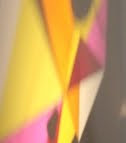
yesterday morning, while searching for an article on hans jenny, i got sidetracked by an article on the british painter paul huxley from a 1969 british art mag. i have to confess knowing absolutely nothing about his work, but being completely bowled over by the two images in the article. huxley, born in 1938, has had an illustrious career, is a member of the royal academy, has work in the tate's collection, and is still painting and exhibiting... but here in los angeles, i've never heard him mentioned.
coincidentally, i went out to see a number of gallery shows yesterday and there was a lot of painting. the problem was that i couldn't get huxley's works out of my head; and i kept feeling that the paintings above seemed fresher and more inventive - and potentially more genuine - than much of the recent painting that unknowingly references this work. along with huxley, i saw a lot of paul feeley (who matthew marks recently put back on artists' radars) and another british painter from the late 60's, robyn denny.
i really wonder why it is that at this particular moment in time, the flat spare abstraction from the mid 60's and 70's has returned to painting, with, unfortunately, none of the substance, and all of the style.
huxley's work - and feeley's - are not refined, as much as they are exploratory. sure, they are consistent, but not at the expense of making an awkward one, a pathetic one, or an incredibly beautiful one.
i think it boils down to the experiences an artist is after - the experiences the artist wants from the making, and the experiences the artist wants to offer a viewer in the exhibiting.
here are some of huxley's words: "paintings today should be about question making, not story-telling... the sermon and the conducted tour have been dealt with and painting can only be enlightening by posing questions and making reconnaissance trips rather than supplying answers. we become more wise by by not knowing. if i were asked to give a guide as to how my work should be understood i would remember mailer's quote from gide: please do not understand me too quickly..."
perhaps huxley's words are the keys to the difference. a lot of the work i've seen lately has no room for "not knowing" in it. there is no way for me to step outside of the "conducted tour" and fall into quicksand, and i am rarely allowed to "not understand too quickly". most of the work offered no questions, and in many cases the answers were just not evocative enough to set one wandering.
bryan robertson ends his article on huxely with a quote from eliot's four quartets:
we had the experience but missed the meaning,
and approach to the meaning restores the experience
in different form, beyond any meaning
we can assign to happiness.
like huxley's painting, eliot's words are simply a number of small parts arranged on a plane. like huxley's painting, eliot's words suggest that their form is fixed in space and time. and like huxley's painting, these fixed things can be read and re-read to reveal multiple levels of thinking, reading, and meaning - they offer experiences of slowness and they reward questions with more questions.
Labels: abstract painting, paul feeley, paul huxely, ts eliot